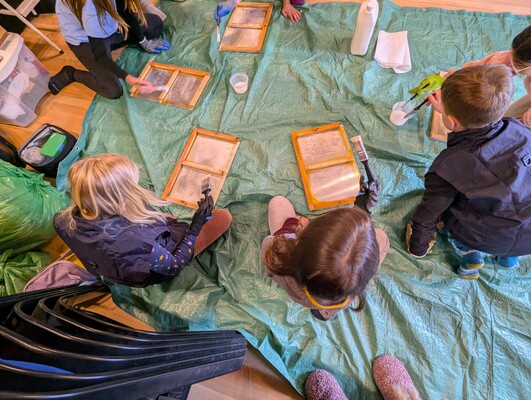
A studio full of explorers learning how to lead (Mar 2-6)
Highlights
Learner-led Character Call Outs. Until now, Character Call Outs on Thursdays have been initiated by guides as a way of modelling the practice. This week learners eagerly stepped forward without prompting, offering heartfelt praise for their fellow travellers and recognizing the contributions they noticed throughout the week.
Welcoming shadow learners. The heroes welcomed two learners for a few shadow days. This gave the learners an opportunity to introduce studio systems, schedules, and promises.
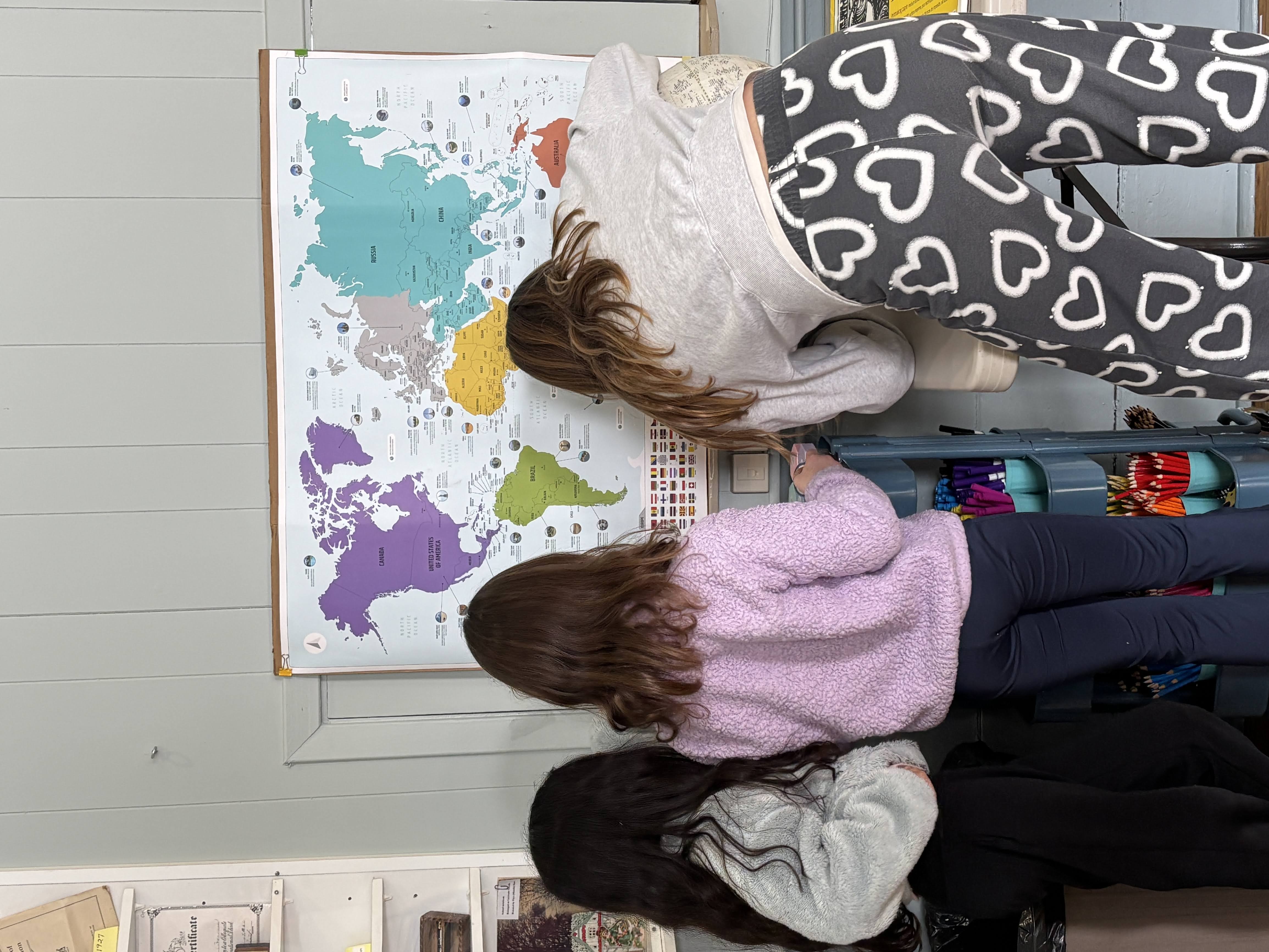
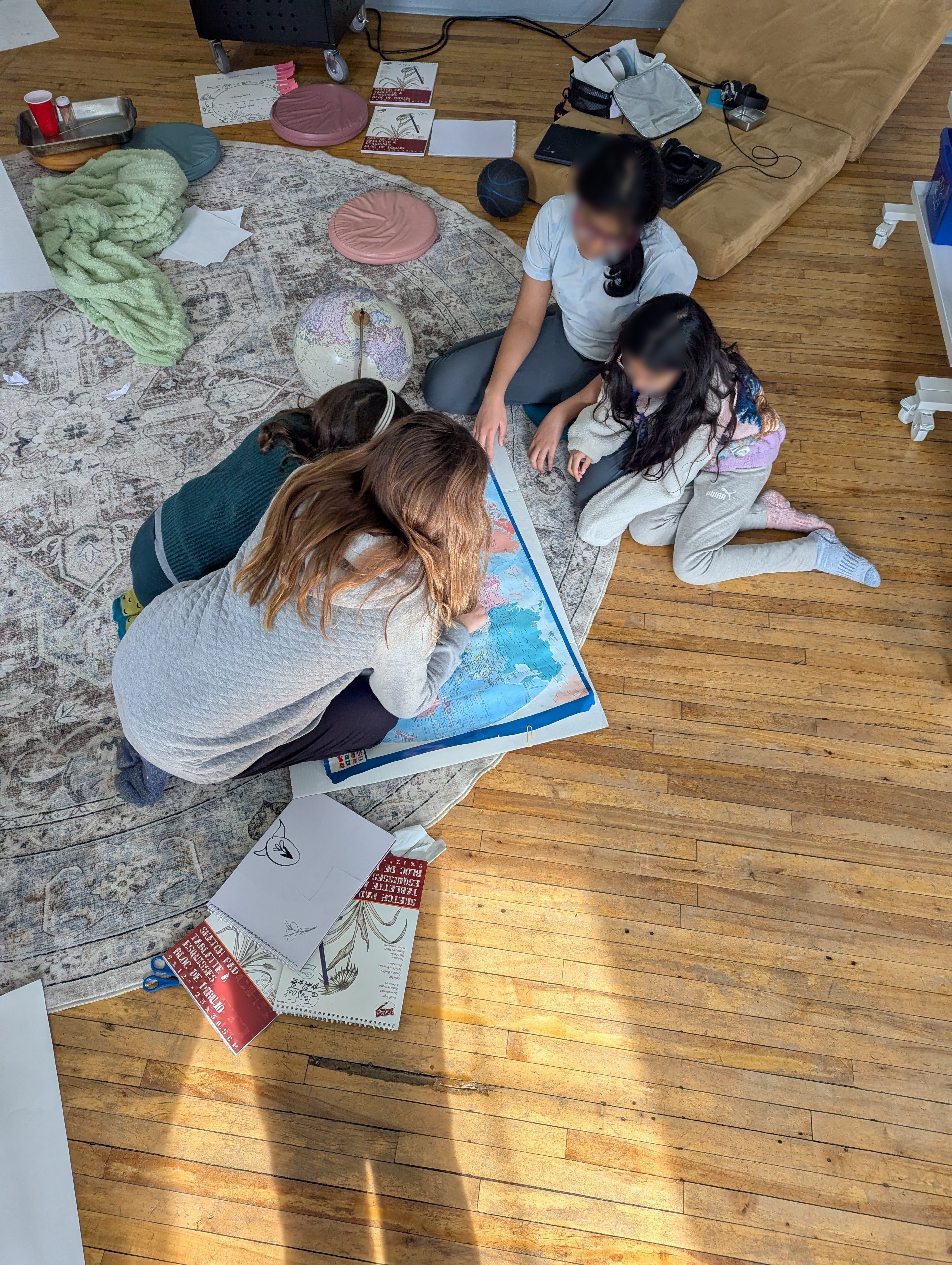
Learners reclaim the helm in Cartography Quest. Guides arrived Thursday ready to scaffold planning and support leadership challenges that had surfaced earlier in the week. Instead, learners arrived with energy and solutions. They reorganized their workspace into a shared headquarters, gathered materials, and used a bell—found by the captain—to call for attention when ideas or votes needed to be communicated.
The latest in educational technology for self-paced mastery in reading, writing, and math
Learners continued building mastery in their core skills through self-paced learning platforms and personal goal setting.
Hands-on, project-based Quests to master the tools and skills needed to solve problems in the real world
Cartography
Our eager explorers are being tested by the collaborative nature of the Cartography Quest and the many challenges each continent presents.
Early in the week, some learners felt overwhelmed by the breadth of what they were being asked to explore. They were invited to revisit the challenge and propose a more focused set of goals—ones that reflected their interests, priorities, and what they felt was achievable. The following day they began tackling their revised challenges, but ran into a new obstacle: how do you organize a crew when no one feels ready to lead?
These moments became an opportunity to experiment with leadership, communication, and problem solving as the team worked through how to move forward together.
The Great Fulton’s Sugar Bush Expedition mini-quest
During the outdoor education day, learners worked at Fulton’s Sugar Bush tagging trails and refinishing signage. After a short introduction to the project management “triple constraint” (time, resources, and scope), learners planned their own workday—setting goals, dividing tasks, and completing them independently by the end of the afternoon.

Written promises and covenants that form a tightly bound community of individuals learning to form authentic friendships and honestly resolve interpersonal problems
Studio systems and promises continued to guide daily life in the studio as learners welcomed visiting peers and worked together through the challenges of collaborative quests.
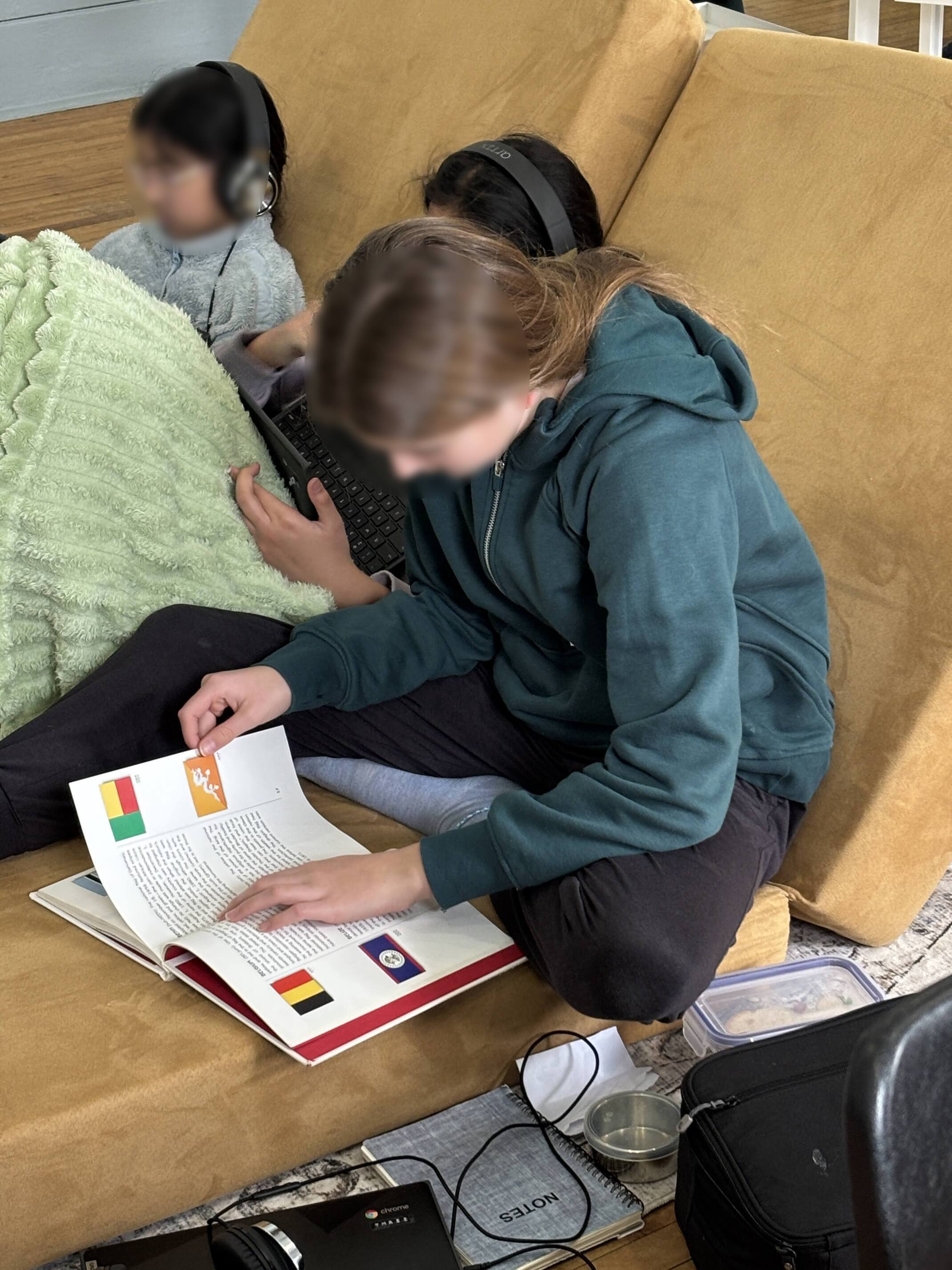
Deep Socratic discussions about heroes, history, and self-governance to hone critical thinking skills and the ability to powerfully think, write, and speak
Learners explored dilemmas faced by heroes and explorers from around the world.
When learning about Brazilian explorer Amyr Klink, who sailed solo across the South Atlantic in a boat he built by hand, learners discussed what they would do after capsizing multiple times only three days into a planned 100-day journey. Would they stay the course and continue with the original plan, or pivot and redesign their approach? Most learners believed a pivot would be wise but thoughtfully argued both sides.
Another discussion focused on David Attenborough. Learners imagined being offered the chance to create a documentary that could launch their career. Should they choose an animal they personally felt passionate about, or one they believed the public would find most interesting? Many learners argued that passion would lead to a stronger film and could win audiences over. Others reasoned that creating something the public already wants could open doors that would later allow them to pursue their personal interests.
Civilizations discussions also sparked thoughtful debate.
While learning about Rome’s war with Carthage, learners first raised their own questions about conflicts happening in the modern world and wondered why war seems to persist throughout human history. Later they were asked to imagine themselves as leaders of a civilization running out of resources. Would they wage war to acquire more land, expand trade opportunities, or search for new territory that had not yet been claimed?
After reading about the caste system in ancient India, learners discussed whether a caste system or class system seem natural or justified. Many felt such systems were unfair and expressed interest in imagining more equal societies. One learner mentioned Communism though they felt it had major issues.
Memorable quotes from learners this week: evidence of the model in action
“The capital of Jamaica is Kingston… wait, Kingston is in Canada too!”
“This is all I need.” (said while snuggling up with a book and a cup of tea during D.E.A.R.)
“We are maple syrup elves! We are Acton elves!”
