When learners begin running the conversation (Dec 8–12)
Highlights: How did we turn learning upside down?
Learners continued exploring Ancient Greece through a range of hands-on challenges as part of Acton Athens.
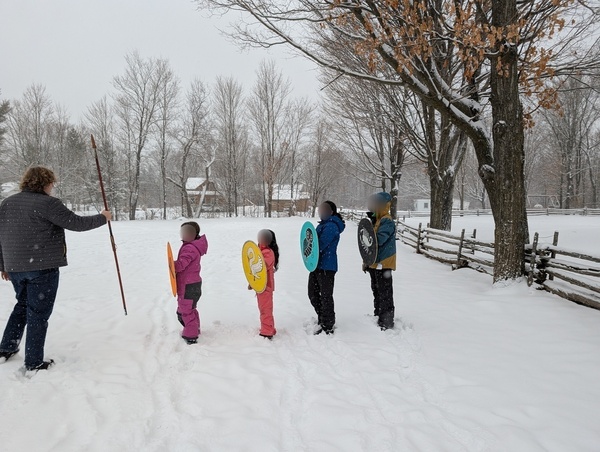
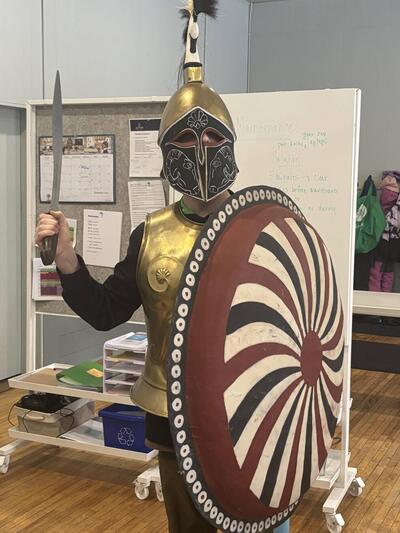
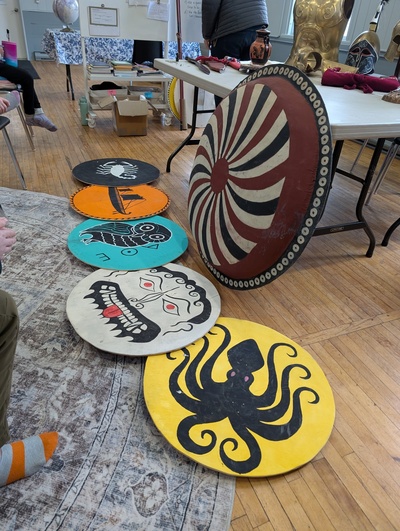
A special visitor from The Greek Phalanx, a local enthusiast of ancient Greek military history with a passion for experimental archaeology, visited the studio. Learners learned about Spartan warfare, examined replica gear, and participated in drills connected to ancient battlefield tactics.
Outdoor time included building forts in snowbanks, as well as an Outdoor Day visit to a neighbouring property where learners explored the environment, spent time with a friendly cat named Boots, and examined a collection of taxidermied animals.
Learners participated in Socratic Smackdowns, launching and facilitating their own Socratic discussions. In an Acton studio, Socratic discussions are a regular practice; in a new studio they are often introduced and led by guides at first, with the goal that learners increasingly develop the skill to launch and lead them over time. This week’s practice fit especially well with Acton Athens, as learners are currently exploring the time of Socrates.
Ink & Impact was introduced as a network-wide writing and publication opportunity. As part of the Acton network, learners have periodic opportunities throughout the year to submit meaningful writing and have their work shared alongside submissions from learners at more than 300 Acton campuses around the world.
The latest in educational technology for self-paced mastery in reading, writing, and math
At Acton, learners make choices about what they will work on and set goals accordingly. This week, learners began setting and refining longer-term goals for the remainder of the school year, including goals related to reading, writing, math, and other areas they identified as important to them. They also discussed what habits, supports, and systems would help them stay accountable to those goals over time.
Hands-on, project-based Quests to master the tools and skills needed to solve problems in the real world
Quest time this week wove together history, creativity, science, and perseverance.
Heroes explored Greek mythology, the science behind myth-making, music and creativity in Ancient Greece, and the thinking of Aristotle.
Learners challenged themselves by teaching themselves how to build abacuses, working through multiple false starts, redesigns, and moments of frustration before finding success.
We welcomed a member of The Greek Phalanx, a historical reenactment group, who led heroes through Spartan battlefield drills, shared military tactics, and allowed learners to try on replica gear—bringing ancient strategy and discipline into embodied experience.
The Excellence Committee continued to hold learners to a high standard, frequently asking heroes to revisit instructions, refine their work, or reattempt challenges before approval.

Written promises and covenants that form a tightly bound community of individuals learning to form authentic friendships and honestly resolve interpersonal problems
Studio culture remained an active focus this week.
Learners engaged in ongoing discussions about what counts as a distraction during launches—what supports learning and what detracts from it.
Town Hall was especially lively, with a notable increase in slip submissions. Learners raised concerns, proposed solutions, and shared announcements—using Town Hall as it’s intended: a tool for shaping their shared space and culture.

Deep Socratic discussions about heroes, history, and self-governance to hone critical thinking skills and the ability to powerfully think, write, and speak
During Quest, heroes debated whether myths help people grapple with the unknown or whether they prevent people from searching for real answers.
In Civilizations, while learning about leadership in Ancient Egypt, learners discussed whether civilizations are better grown through trade or war.
In the Stoa, learners facilitated and judged their own discussions through Socratic Smackdown, debating questions such as:
Can we ever truly know something is true?
Is private property natural and good, or should it be abolished?
The quality of disagreement—respectful, evidence-based, and curious—continues to deepen.
Memorable quotes from learners this week: evidence of the model in action
“I completed it! It took ages.”
“It would be very nice if you didn’t put your laptop on top of my lunch bag.”
“I disagree, but I’m open to hearing what other people have to say.”
“It’s a puzzle, but it’s fun.”

